How an Electrical Panel Secures Your Home from Overloads
Walk into a garage or basement and you'll ultimately find the gray metal box that quietly decides whether your living room lights remain on when the microwave and space heating system run at the very same time. That box, the electrical panel, does more than route power. It views, limits, and responds. When something pushes your electrical wiring beyond safe limitations, the panel steps in to keep heat from structure and insulation from sweltering. It is the traffic police officer, the fuse, and the emergency situation shutoff rolled into one enclosure. Understanding how it does that makes you a much better house owner and a safer one.
The task your panel really does
Every electrical service starts outside the house at the energy meter, then feeds into the primary breaker inside the electrical panel. From there, power is divided into branch circuits sized for the loads they serve. The panel's mission is simple on paper: deliver sufficient existing to run your devices without ever letting the electrical wiring carry more than it can securely deal with. Overloads create heat. Heat breaks down insulation, loosens up terminations, and, provided sufficient time, begins fires. The panel keeps present in bounds by determining, limiting, and detaching when necessary.
Electricians learn early to think in terms of "ampacity," the optimum present a wire can bring continuously without exceeding its temperature level rating. A 15 amp lighting circuit wired with 14 AWG copper is safeguarded by a 15 amp breaker for a reason. If that breaker were 20 amps, the wire might see excessive heat before the breaker trips. The panel is a system of matched parts, from the primary breaker to the tiniest branch breaker and down to the bus bars and lugs, all selected so the weakest link never ever experiences more than it can take.
The anatomy of a contemporary electrical panel
You can comprehend how the panel defend against overloads by knowing its primary elements and what each piece senses.
The enclosure is the metal cabinet and door. It keeps live parts contained, provides a bonding point to the structure, and offers structural assistance for everything inside. A service-rated enclosure has provisions for a main disconnect and clear labeling to show it.
Inside you'll discover the main breaker. This is the master switch that restricts the home's total existing draw to the service score. If you have a 200 amp service, the main breaker is typically 200 amps. It serves as both an overcurrent device and a manual shutoff. If something goes catastrophically incorrect upstream or the combined load exceeds the service capacity, the main breaker opens.
Two hot bus bars run vertically within. They are fed by the primary and offer the slots where individual breakers clip in. Every other slot arrive at the opposite stage, which matters for electrical panel replacement stabilizing loads and for double-pole breakers that need both stages for 240 volt circuits.
Neutral and ground bars sit off to the side. In a primary circuit box, the neutral and ground are bonded, meaning they are electrically linked at one point. In downstream subpanels, they are isolated to prevent objectionable existing on grounding paths. Correct bonding and separation are not simply code niceties, they straight affect how safely your panel clears faults.
Branch circuit breakers snap into the bus bars and secure onto specific wires. Contemporary breakers are more than basic switches. Thermal and magnetic trip components notice sluggish overloads and immediate brief circuits, and lots of more recent designs include advanced features like arc fault and ground fault defense. When you feel a breaker that is warm to the touch after a heavy clothes dryer cycle, that heat is from its thermal element keeping an eye on the current.
Lugs and terminations clamp conductors to breakers or bars. The torque on these screws matters. Too loose, and you get arcing and heat at a connection long before any breaker journeys. Too tight, and you can harm strands or fracture insulation. Great torque, clean copper or aluminum properly prepared with antioxidant where required, and correct strip lengths all work with the breaker to maintain a safe, low-resistance path.
How a breaker knows when to trip
People often think of a breaker as a magic box that "just knows." The physics is straightforward. A standard thermal-magnetic breaker has 2 noticing systems working together. The thermal part is a bimetal strip that bends predictably as it warms. When it flexes enough, it unlatches and opens the circuit. Due to the fact that it warms over time, it responds to sustained overloads. If you plug a lot of area heating systems into one 15 amp circuit and it pulls 18 to 20 amps for a number of minutes, the breaker's thermal element will heat, bend, and trip. That postponed action mirrors how wire insulation heats up under overload.
The magnetic part is a little electromagnet coil wired in series. In a brief circuit, existing spikes to many times the breaker's score in a split second. The magnetic field snaps the latch open nearly immediately. That speed matters since fault currents are restricted by the impedance of the circuit and can be really high. A rapid journey restricts just how much thermal and mechanical damage occurs.
Breakers also have time-current qualities that define exactly how fast they ought to journey at given multiples of their ranking. A 20 amp breaker might enable 25 amps for some variety of seconds however will go quickly at 100 amps. Manufacturers release curves for their designs, and those curves assist coordination choices in bigger systems. In a home, you may never take a look at those charts, however the panel's defense depends upon them.
Arc fault and ground fault gadgets include another layer
The basic overload and short-circuit protections do not capture everything. Arcing faults can smolder for hours without drawing adequate current to journey a thermal breaker, and ground faults can trigger harm at surprisingly low existing. This is why contemporary panels typically consist of AFCI and GFCI protection. You see them as breakers with test buttons or as receptacles in kitchens and bathrooms, however the underlying noticing lives well with the remainder of the panel's protective strategy.
An arc fault circuit interrupter listens for the electrical "signature" of arcing. Loose connections, damaged cords, and crushed wires can create intermittent arcs that generate heat and carbonize insulation. That is a fire path. The AFCI algorithm identifies the high-frequency elements of that noise and opens the circuit before the temperature climbs.
A ground fault circuit interrupter look for imbalance between the hot and neutral conductors. Current that leaves on hot and does not return on neutral has to be going someplace, typically through water or an individual to ground. A GFCI journeys at around 4 to 6 milliamps imbalance in receptacles and around the exact same magnitude when constructed into breakers, which is far listed below the limit that would journey a thermal or magnetic breaker. Kitchens, restrooms, garages, exterior outlets, and laundry areas take advantage of this protection.
Combination gadgets exist, and panel producers offer breaker models that integrate AFCI and GFCI functions in one device. This consolidates security in the electrical panel and cleans up the downstream circuitry, though it needs using breakers suitable with your panel.
What an overload appears like in a house
Most household overloads come from layering portable loads on top of a base load. A typical 15 amp circuit may power overhead lighting and a few receptacles in a bedroom. Each LED bulb draws a fraction of an amp, but include an area heater at 12.5 amps on high, plus a vacuum at 9 to 12 amps when someone plugs in down the hall, and the thermal component in the breaker has a case. It might not journey immediately; it depends upon how long those loads overlap. If your breaker opens after 3 or four minutes of vacuuming, that is typical habits and indicates the panel protected your wiring as designed.
Kitchen circuits offer another example. Counter top device circuits are often 20 amps to accommodate coffee machines, toasters, and mixers. Even so, 2 1,500 watt devices at the exact same time come close to that breaker's limitation, especially if the fridge's compressor kicks on and adds a short surge. Good cooking area layouts prepare for usage by dedicating circuits to big appliances, but people move things around. When the breaker journeys, it is the panel imposing the limit on the wire that runs through your walls.
Air conditioning and heat pumps push a various sort of stress. Compressors have locked-rotor present that can be a number of times their running amps. Effectively sized two-pole breakers and conductors handle that. If a compressor struggles to begin due to a stopping working capacitor or low voltage, you might see nuisance journeys. That is not constantly an overload problem however an indication that the equipment requires service. The panel still does its job by refusing to let a struggling motor prepare the circuit.
The primary breaker's role and why service size matters
A home's service ranking sets the ceiling for overall demand. A 100 amp main was common for little homes developed years back. Today, with electric varieties, dryers, A/C, tankless hot water heater, EV chargers, and hot tubs, 200 amps is typical and sometimes insufficient. The main breaker is sized for that service. If you consistently journey the main throughout peak usage, the panel and its feeder are telling you that the home's facilities is underpowered for your lifestyle.
Load calculation is the formal way to address this. Electricians use standardized methods, consisting of need elements for certain loads, to estimate the maximum anticipated demand. The estimation thinks about square video, fixed appliances, HVAC, and specialized loads, then gets to a service size that will support them without persistent overload. A house owner's guideline is less accurate, however if you have included big electric loads throughout the years and experience dimming lights or frequent nuisance trips throughout supper and laundry hours, it is time to consider a panel and service upgrade.
Upgrading the electrical panel is not just switching the box. The service conductors, meter base, grounding electrode system, and utility coordination frequently need attention. In older areas, the overhead drop or underground lateral might require upsizing. The advantage is clear: a right-sized electrical panel minimizes the threat of overloads at the service level and provides you enough breaker spaces to separate out circuits so that private branch circuits do not get overstuffed with devices.
Why proper breaker sizing and wire gauge go hand in hand
A breaker's task is to secure the wire downstream, not the device at the end. That concept prevents the most typical error homeowners make when dealing with a tripping breaker: setting up a larger one. If the circuit journeys at 15 amps, bumping it to 20 amps without altering the wire turns the breaker into a prospective liability. The 14 AWG wire need to not carry 20 amps constantly. The panel is only as safe as the match in between breaker size and conductor size.
Common domestic branches utilize 14 AWG copper for 15 amps, 12 AWG for 20 amps, and 10 AWG for 30 amps. For longer runs, voltage drop can become a problem, and upsizing the conductor without altering the breaker can improve performance. If you have actually a detached garage 150 feet away and you run a table saw, you may see lights dim when the saw begins. A larger wire decreases drop and heat, while the breaker size stays connected to the receptacles and use.
Aluminum conductors appear on bigger circuits and service feeders. They are safe when ended correctly and sized properly, but they are less flexible of inappropriate torque and oxidation. The panel's lugs must be listed for aluminum, and antioxidant paste should be used where defined by the manufacturer. A well-installed aluminum feeder behind a properly sized breaker performs its protective role like copper.
How the panel reacts to brief circuits versus overloads
Overload is excessive present for too long. A brief circuit is existing taking a faster way, typically with stimulates, sound, and immediate darkness. The panel distinguishes the two and reacts appropriately. In a short, the magnetic journey element reacts in milliseconds. That quick trip confines damage to the point of fault and spares the remainder of the circuit. You may discover a nicked cable television where a screw bit into it during a remodel, or a damaged cord whose conductors touched.
In an overload, the panel is less significant. It heats up internally and lastly clicks off. The difference matters when you troubleshoot. If a breaker journeys quickly when you reset it, believe a short. If it stays on for a while then journeys once again under load, suspect a lot of loads or a failing motor drawing excess present. The panel's habits is a diagnostic signal.
The peaceful work of grounding and bonding
Protection is not just about turning power off. It is also about providing fault present a safe, low-impedance path so that breakers see enough existing to journey rapidly. The electrical panel is where the grounding electrode system incorporate. Ground rods, concrete-encased electrodes, or metallic water pipes bond to the panel, and the neutral is bonded at the service disconnect in a primary panel. That single bond allows fault current to return through the service neutral and journey the breaker rather than sitting on metal parts waiting for an individual to bridge the gap.
Subpanels in separated buildings add nuance. A separate structure with its own panel needs a devices grounding conductor run with the feeder, and the neutral should be separated because subpanel. If it is not, neutral current can flow on metal conduits or ground rods, stimulating surfaces you anticipate to be safe. That, in turn, hinders the panel's ability to acknowledge and clear faults. Good bonding and grounding make overload and fault security more reliable by funneling currents where the breakers can pick up them.
Maintenance that keeps the panel protective
Electrical panels age in small ways. Dust gathers, connections relax with thermal biking, and labels fade. None of that causes an overload, however all of it can make overload protection less trusted. The best panels I open appearance boring: clean, tight, clear labeling, and breakers from the exact same producer as the panel.
If you want to keep your electrical panel protective, concentrate on a few routines while understanding that anything inside the panel ought to be dealt with by someone trained and qualified. Visual assessment with the cover on is safe. Search for rust on the enclosure, signs of water invasion, blister marks around the deadfront, or labels that no longer match the circuits they describe. If you see staining near the top of the panel, water might be getting in along the service mast and dripping within. Wetness and electrical energy are a bad mix, and rust raises resistance, which raises heat.
Schedule regular torque checks. Breaker and lug connections loosen up with time under heating and cooling cycles. A qualified electrician uses a torque screwdriver to verify terminations are within the manufacturer's specs. That little act prevents locations that can look like overloads to a breaker or, even worse, fail without tripping.
Do not double-tap breakers unless the breaker is listed for two conductors. 2 wires under a single screw create irregular pressure and loose contact, which becomes a heat source. If you need more circuits, the appropriate fix is a subpanel or a panel with extra spaces. Tandem breakers are acceptable where the panel is listed to accept them, in specific slots, and within the overall limit on circuits.
Keep paint and debris out of the panel. Throughout renovating, cover the panel. Overspray on breaker manages can gum up systems. Sawdust is flammable and hydroscopic, a poor mix in an enclosure created to manage heat.
A house owner's approach to avoiding overloads
Some overload prevention has nothing to do with the panel and whatever to do with how circuits are used daily. Kitchens with 2 small appliance circuits still need thoughtful positioning of gadgets. Plug the toaster and coffee machine into outlets that are on different circuits if available. In bedrooms and living rooms, utilize one area heating system per circuit and acknowledge that a heating unit plus a vacuum on the very same 15 amp branch is likely to trip.
When adding brand-new loads, believe at the circuit level. A window air conditioning system may be labeled at 1,000 to 1,500 watts. On a 15 amp circuit already handling lights and a tv, that is tight. Running a brand-new 20 amp circuit from the electrical panel to that area might be a much better financial investment than living with nuisance trips and warm cords.
Electric vehicle charging has become the clearest test of a home's electrical capability. A Level 2 battery charger at 40 amps continuous needs a 50 amp breaker and properly sized wire, and it must be on a devoted circuit. Some wise chargers provide load sharing or service monitoring that decreases existing when the remainder of the house is heavy. That can prevent tripping the primary. In older homes with 100 amp service, load management can be a bridge to a future service upgrade.
Tradesman ElectricHere is a brief, useful checklist you can utilize before calling for help if you suspect overloads are a concern:
- Map your circuits with an assistant, turning breakers and keeping in mind outlets and lights affected, so you understand what shares a branch.
- Identify high-wattage home appliances and avoid running multiple on the same branch simultaneously, specifically area heating units, toasters, and vacuums.
- Feel receptacle faceplates and cords throughout heavy use; warmth suggests you are near the limit or have a loose connection that requires attention.
- Note the timing of breaker trips: instant trips indicate faults, delayed trips under load indicate overloads.
- If trips accompany rain or snow melt, search for indications of water intrusion at the panel or meter base and get that fixed first.
When an upgrade is the best answer
There is a temptation to fix recurring overloads with a larger breaker, a cheater device, or a power strip with a reset button. All of those push the problem downstream to the wire in your wall. The proper option might be a circuit split, a dedicated line for a heavy appliance, or a panel replacement.
Panels set up with three or four extra areas provide you headroom to include circuits. If your panel is complete and depends on tandem breakers in every slot, you have limited methods to separate loads. A 30 or 40 space 200 amp panel provides you the versatility to put the microwave on its own circuit, offer the restroom a devoted GFCI-protected branch, and separate the living room outlets from the lighting. The capacity to distribute loads appropriately is itself a protective feature. It decreases the chances that regular activities stack on top of each other in a manner that surpasses a breaker's rating.
In older homes, a service upgrade may accompany other enhancements, such as setting up a whole-house rise protective device at the panel. While surge protection does not relate straight to overloads, it maintains electronic devices and smart breakers that are now common. A tidy, contemporary electrical panel with identified breakers, space for growth, and incorporated protective devices produces a durable foundation. It endures weekend projects, brand-new appliances, and seasonal needs without flirting with risky currents.
Edge cases and the judgment calls that matter
Real homes hardly ever match textbook diagrams. I have actually opened panels with completely sized breakers feeding circuits that still ran hot since someone buried a junction behind a built-in cabinet, producing a loose wirenut that warmed under load. The breaker did not see sufficient present to journey rapidly, but the connection prepared. The repair was easy when discovered, yet it needed believing beyond the panel.
Another common edge case includes multiwire branch circuits where 2 hots share a neutral. These can be safe and efficient, but just if the 2 hots are on opposite stages and the breakers are tied so that both detach together. If somebody moves one leg to the same phase to pick up an extra slot, the neutral can see the sum of the currents rather of the distinction and end up being strained without tripping either breaker. The panel's physical layout and handle ties avoid this when installed correctly.
Portable generators and move switches include intricacy. A transfer switch or interlock kit avoids backfeeding the grid and isolates picked circuits. If installed improperly, neutral and ground bonding can be duplicated or omitted in the incorrect place, changing how fault current returns. That can slow breaker action. When used effectively, an interlocked panel or listed transfer switch maintains the designed protective behavior while keeping lights on during outages.
Finally, annoyance journeys in some cases trace back to shared neutrals or obtained neutrals in lighting circuits where a remodel pulled power for a brand-new component from a neighboring box on a different circuit. The panel sees nothing wrong till loads align and the neutral overheats in such a way that does not journey any breaker. Fixing this involves mapping circuits and separating them easily at the panel and in the field, a suggestion that the panel's protective function depends on sincere downstream wiring.
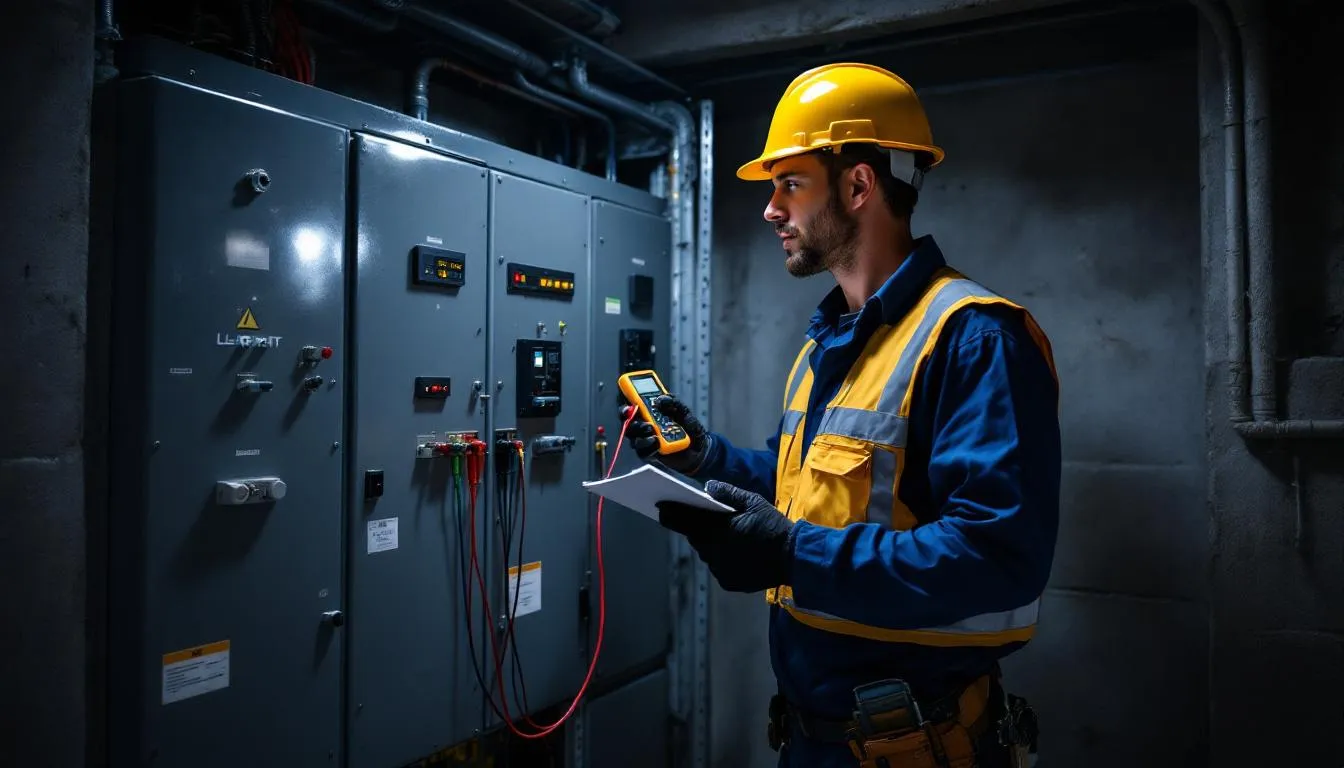
The quiet proof that your panel is doing its job
A breaker that trips is typically an indication of a healthy system. It is appealing to be frustrated when a motion picture night goes dark because somebody chose to make toast. Yet that moment is the electrical panel securing the home from an overload that would, with time, damage electrical wiring. If you find yourself resetting the exact same breaker weekly, the panel is narrating. Either the circuit bears more than its share, or something on it is weakening. Listen to that story, and you can react with easy rearrangement, a brand-new circuit, or a service upgrade.
Treat the electrical panel as an instrument as much as a switchboard. Keep it clean, identified, and lightly loaded where possible. Match breaker sizes to wire determines and to intended loads. Use AFCI and GFCI where needed and where they make sense. When something modifications in your home's electrical life, from adding an EV charger to developing a workshop, analyze the currents that will stream and where the panel will need to state no. That is how the gray box on the wall secures you from overloads, not in one heroic minute, however in a consistent series of determined decisions, countless times a day.